Prior Authorization Services: What They Cover, Why They Fail, and When to Outsource
November 16, 2026 · 12 min read
Prior authorization services manage the entire process of obtaining payer approval before a healthcare service, procedure, or medication is delivered. Without a completed, approved authorization, the resulting claim is almost guaranteed to deny. For most practices, the problem isn't understanding that prior auth matters: it's having the staff bandwidth and payer-specific knowledge to get it right, every time, before care is delivered.
This guide covers what prior authorization services include, what causes them to break down, and how to evaluate whether your current approach is costing you revenue.
TL;DR: In-House vs. Outsourced Prior Authorization Services
| Factor | In-House PA Team | Outsourced PA Services |
|---|---|---|
| Staffing cost | Full salary, benefits, training | Per-service or percentage-based fee |
| Payer knowledge | Limited to your payer mix | Broad, cross-payer experience |
| Turnaround time | Depends on staff load | Typically faster with dedicated teams |
| Scalability | Constrained by headcount | Scales with volume |
| EHR integration | Native | Requires onboarding |
| Denial follow-up | Often handled separately | Usually included |
| Coverage for absences | Gap risk during turnover | Continuous coverage |
| Best for | High-volume in-house ops with stable payer mix | Growth-stage or understaffed practices |
What Are Prior Authorization Services?
Prior authorization (PA), also called pre-authorization, pre-cert, or precertification, is the process by which a healthcare provider obtains advance approval from an insurance payer before delivering a specific service, procedure, or medication. Payers use the process to verify medical necessity and confirm coverage before they're obligated to reimburse.
Prior authorization services handle this process end-to-end on behalf of a practice or facility. That includes identifying which services need authorization, gathering and submitting clinical documentation, tracking approval status, managing peer-to-peer reviews when needed, and tying the final authorization number back to the outgoing claim.
The scope and complexity of what requires prior auth varies by payer, plan type, and service line. It's one of the most administratively intensive functions in the revenue cycle, and one of the most consequential: a missed or incomplete authorization is among the top reasons claims deny.
What Prior Authorization Services Actually Cover
A complete prior authorization service covers more than just submitting a form. Here's what end-to-end PA management looks like in practice.
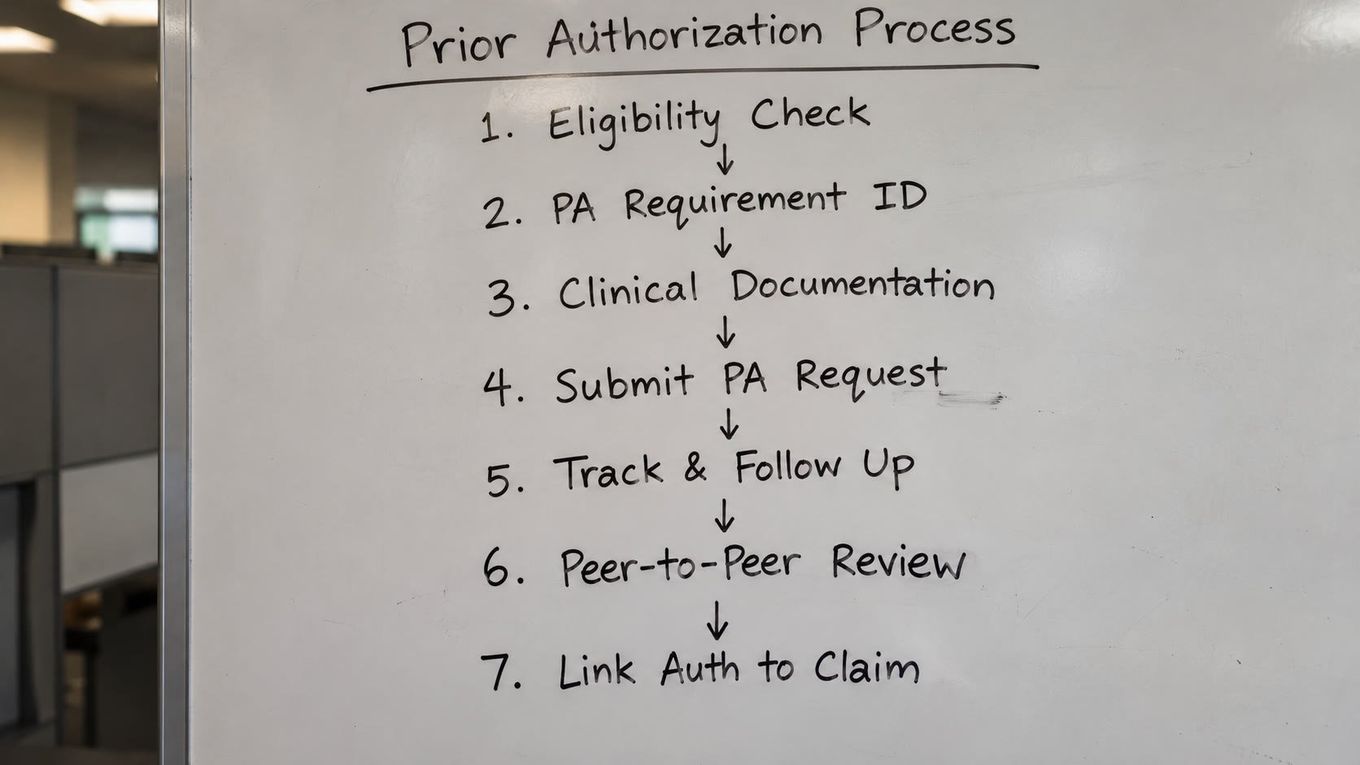
1. Eligibility and Benefits Verification
Before any PA request is submitted, the service confirms whether the patient's plan actually requires prior authorization for the requested service. Not every procedure requires PA on every plan, and submitting a PA for a service that doesn't need one wastes time. Missing one that does is worse.
This step also confirms coverage tier, deductible status, and any referral requirements that need to be in place before authorization will process.
2. PA Requirement Identification
Payer PA requirements change frequently and vary by plan. A service that requires PA under a commercial PPO may not require it under a Medicare Advantage plan from the same insurer. Experienced PA teams maintain current payer-specific knowledge and check authorization requirements against the patient's specific benefit plan, not just the payer's general policies.
3. Clinical Documentation Compilation
This is where most in-house PA efforts break down. Payers require documentation that supports medical necessity: clinical notes, treatment histories, prior treatment failures (especially for specialty medications or higher-level care), diagnostic codes, and physician attestations. Incomplete documentation is a leading cause of initial PA denials.
A PA service takes responsibility for identifying what documentation each payer's clinical review team requires and assembling a complete package before submission.
4. Prior Authorization Submission
Submission happens through payer portals, EDI 278 transactions, fax, or phone, depending on the payer's requirements. Some payers accept electronic submissions for routine requests; others still require manual fax workflows for certain service types or clinical exceptions. Prior authorization services manage the channel and submission format appropriate for each payer.
5. Status Tracking and Follow-Up
Submitted requests don't always receive a timely decision. PA teams track pending requests, follow up with payers on decisions that are delayed, and escalate when turnaround times are breached. This is especially important for urgent authorizations and for services where scheduling is time-sensitive.
6. Peer-to-Peer Review Coordination
When a payer's initial medical necessity review results in a denial, the requesting provider often has the right to request a peer-to-peer review: a direct conversation between the treating physician and the payer's medical reviewer. PA services coordinate these reviews, scheduling the call, preparing the clinical summary, and ensuring the physician has what they need to make the case effectively.
7. Authorization-to-Claim Linkage
An approved PA number needs to accompany the outgoing claim. If that linkage fails because the authorization number is missing from the claim, the wrong service date is listed, or the authorized CPT code doesn't match what was billed, the claim will deny even with a valid, approved authorization in place. PA services that work within your billing workflow close this gap.
The Real Cost of Authorization Failures
Authorization-related denials are the most common and most preventable denial category in the revenue cycle. Common authorization-related denials include missing prior authorizations, expired authorizations, insufficient approved units, missed concurrent reviews, and incorrect levels of care.
For behavioral health practices in particular, this is an acute problem. IOP and PHP billing, which require ongoing concurrent authorizations to maintain approved units as treatment continues, is an area where authorization gaps translate directly to unpaid sessions. A missed concurrent review doesn't just mean one denied claim: it can void coverage for an entire authorization period retroactively.
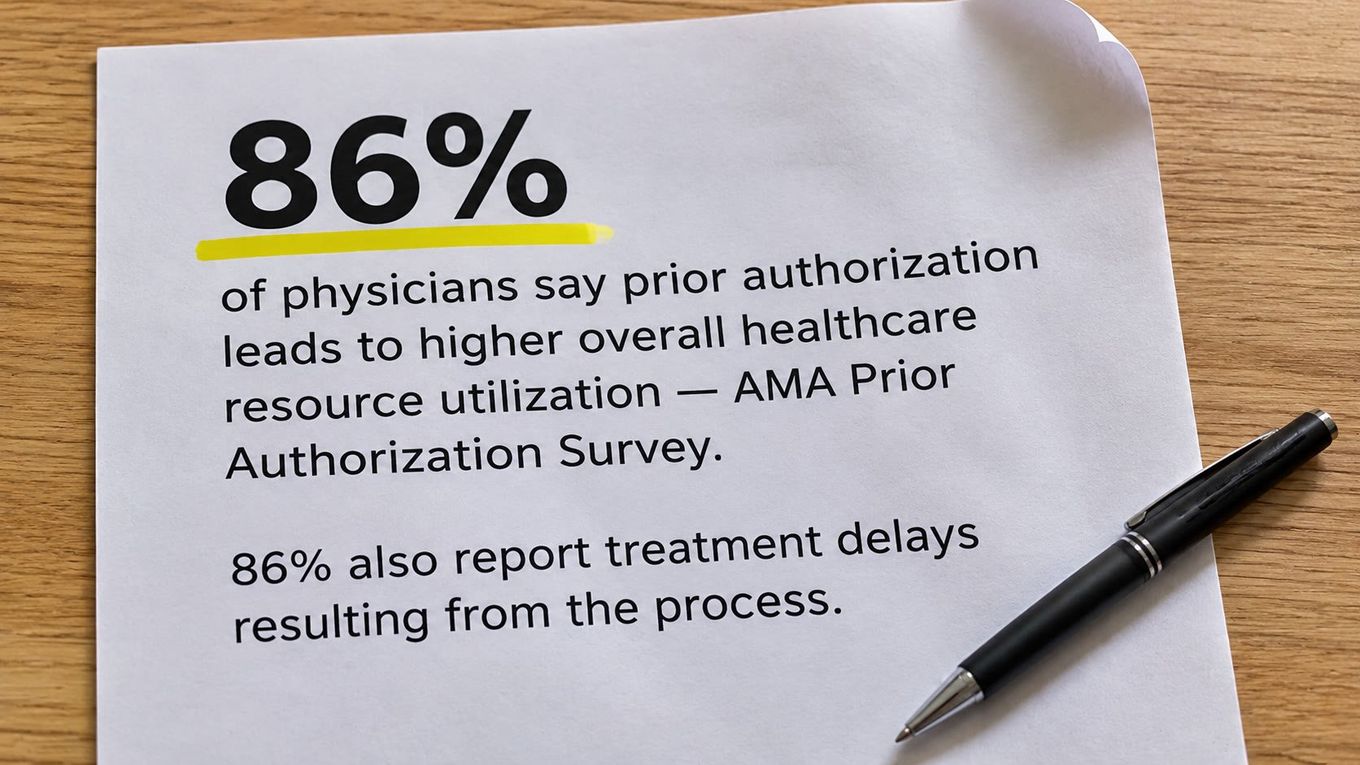
The administrative cost adds up quickly. According to the AMA's annual prior authorization physician survey, 86% of physicians say prior authorization leads to higher overall utilization of healthcare resources, resulting in unnecessary waste rather than cost savings.
For practices evaluating outsourced PA services, the business case often comes down to whether the cost of maintaining an in-house team outweighs the revenue recovered through faster approvals and fewer authorization-driven denials.
Payer Prior Authorization Requirements: What Changes by Plan
No two payers run the same PA process, and requirements vary not just by payer but by product line within the same payer. The table below outlines general behavioral health PA patterns across major commercial payers. Always verify current requirements against each payer's provider portal, as policies update frequently.
| Payer | Behavioral Health PA Process | Key Notes |
|---|---|---|
| Aetna | Portal-based for most services; clinical documentation required for higher levels of care | Carve-out plans managed separately; verify benefit structure before submission |
| Cigna / Evernorth | Evernorth manages behavioral benefits for most Cigna commercial plans; PA through Evernorth portal | Outpatient therapy often exempt; IOP/PHP and inpatient require PA and concurrent reviews |
| Optum (UHC) | Optum Behavioral Health manages PA for UnitedHealthcare behavioral benefits | High documentation standards for medical necessity; strict concurrent review requirements for intensive levels |
| Medicare Advantage | Varies by plan; traditional Medicare has limited PA requirements but MA plans set their own | CMS-0057-F (see below) now governs decision timelines for MA plans |
| Medicaid / Managed Medicaid | State-specific; managed Medicaid plans often have the strictest PA requirements | High variability; verify by state and MCO |
For specialty practices beyond behavioral health (surgery, oncology, cardiology, radiology), PA requirements are equally complex and often more procedure-specific. High-cost imaging, surgical procedures, specialty medications, and durable medical equipment almost universally require prior authorization across commercial and government payers.
What CMS-0057-F Means for Your Practice
The CMS Interoperability and Prior Authorization Final Rule (CMS-0057-F) introduced mandatory electronic prior authorization requirements and decision timeline standards for Medicare Advantage, Medicaid, CHIP, and qualified health plan issuers.
Key provisions that affect practice operations:
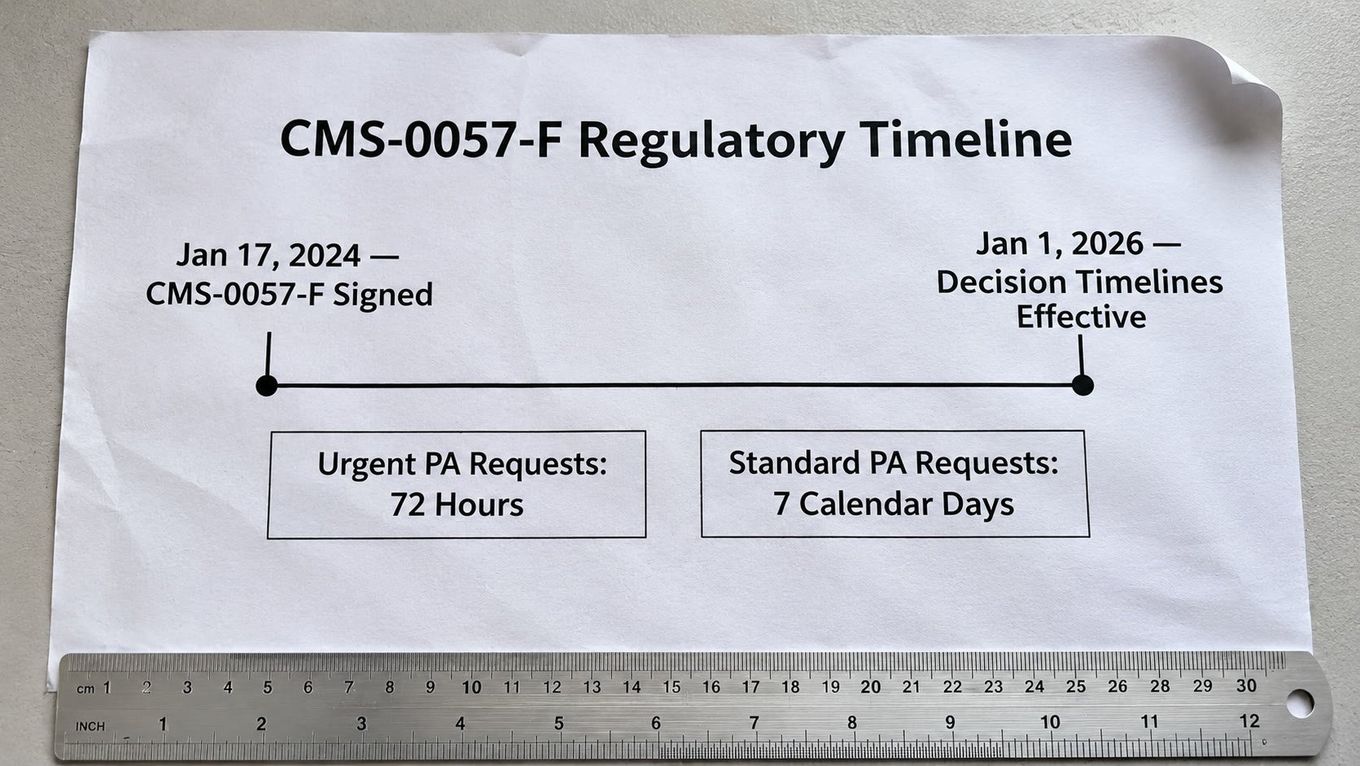
- Decision timelines: Payers covered under the rule must respond to urgent PA requests within 72 hours and standard requests within 7 calendar days, effective January 1, 2026.
- Denial transparency: Payers must provide specific reasons for PA denials, not just generic medical necessity rejections.
- Electronic PA: Covered payers must implement the FHIR-based Prior Authorization API, enabling EHR-integrated PA submissions for many common workflows.
For practices, this means two things. First, if a covered payer is sitting on a PA request past the new decision windows, you have recourse. Second, the shift toward electronic PA is accelerating, but adoption is uneven, and manual workflows still dominate for a significant portion of payer interactions.
Practices working with PA service providers should confirm their vendor tracks these timelines and escalates when they're breached.
In-House vs. Outsourced Prior Authorization Services: The Real Trade-Off
The right answer depends on your volume, staffing stability, and payer mix, not on a universal rule.
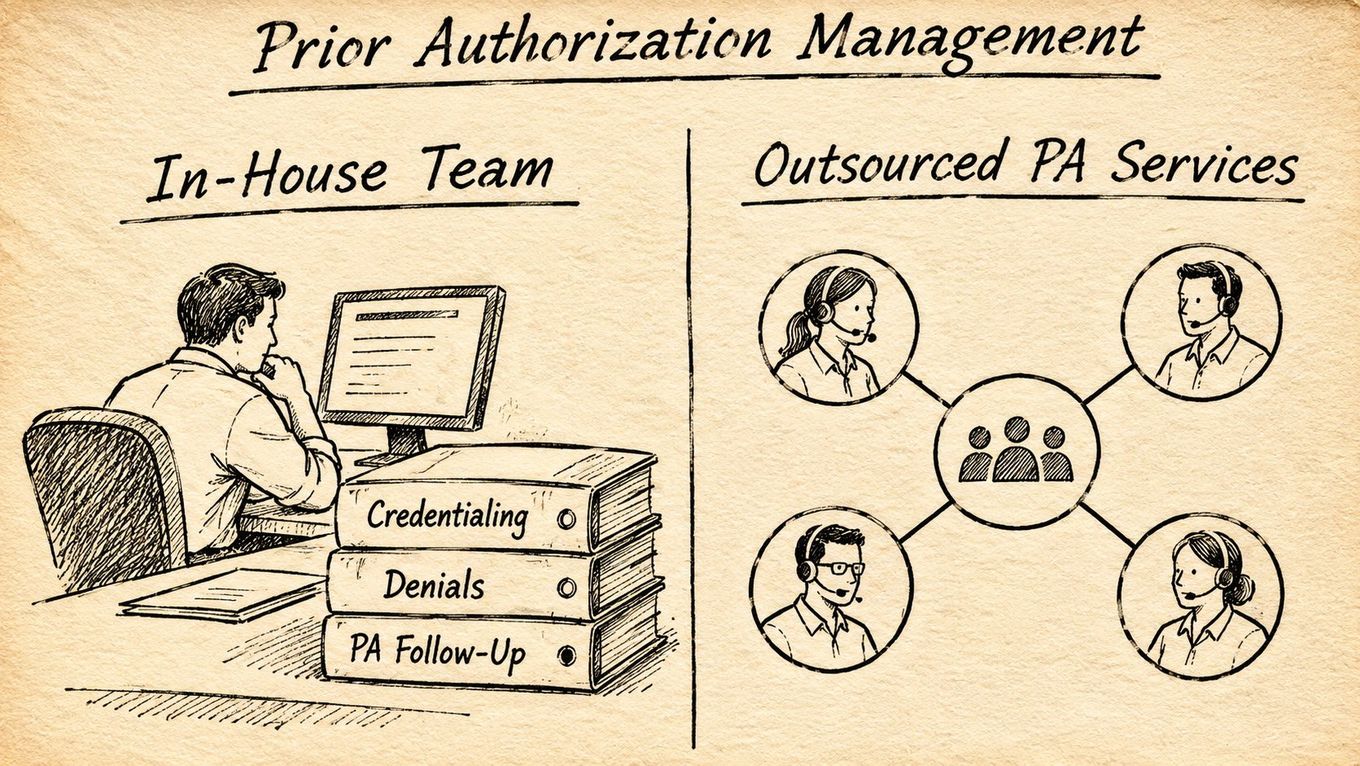
In-house PA management works when:
- Your volume is high enough to justify dedicated headcount
- Your payer mix is narrow and your staff has deep familiarity with those specific payer portals and policies
- You have a stable, low-turnover front-office team
- Your EHR has built-in PA tools that integrate with your payer portals
Outsourcing makes more sense when:
- You're growing and PA volume is outpacing your team's bandwidth
- You're dealing with specialty billing across multiple payers with different PA requirements
- Your denial rate is creeping up and authorization gaps are a consistent root cause
- Turnover in your billing or front-office team is creating coverage gaps
- You're in behavioral health, where concurrent authorization management adds an ongoing workload that doesn't exist in other service lines
For practices that handle a broad payer mix or operate across multiple specialties, in-house PA management often hits a knowledge ceiling. The payer-specific nuances required for clean authorization submissions, including documentation standards, concurrent review timing, and peer-to-peer escalation paths, require dedicated specialization that most practices can't efficiently maintain on their own.
If your AR aging report shows a pattern of authorization-related denials, that's the most direct signal that your current PA workflow has a gap. See how our denial management services approach authorization-driven denials as part of a broader recovery strategy.
What to Look for in a Prior Authorization Services Partner
Not all outsourced PA services are equivalent. When evaluating a partner, ask these questions:
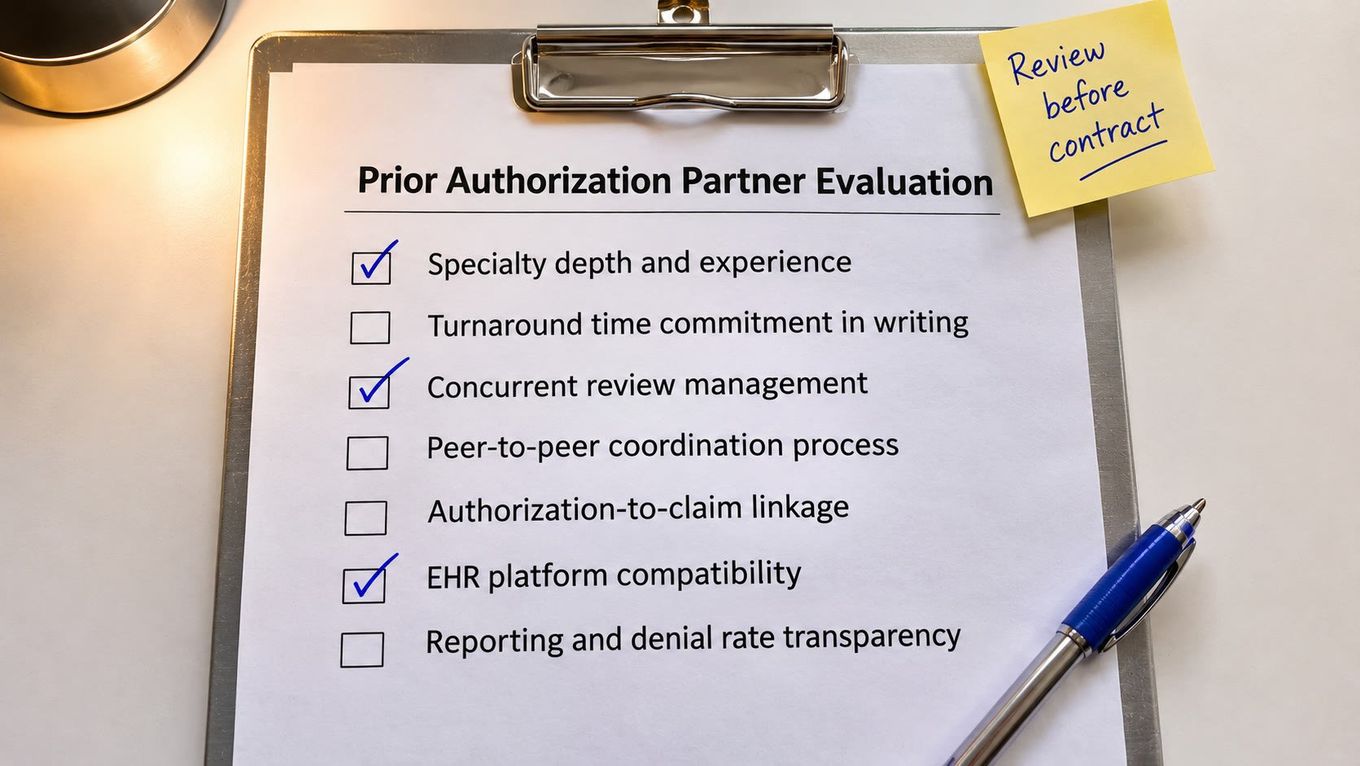
- What specialties do you actively support? PA requirements differ dramatically between behavioral health, surgery, oncology, and primary care. Generic "all specialties" claims need specifics.
- What are your turnaround time commitments? For standard and urgent requests, in writing, not marketing copy.
- How do you handle concurrent reviews? For IOP, PHP, and inpatient behavioral health, this is non-negotiable.
- Do you coordinate peer-to-peer reviews? Who schedules them, who prepares the clinical summary?
- How does the authorization number get tied back to the claim? This linkage point is where otherwise-approved PAs still result in denials.
- What EHR platforms do you work in? Integration with your existing systems reduces handoff errors.
- What reporting do you provide? You should be able to see authorization approval rates, denial reasons, and pending request aging at a glance.
Why Trust This Article
Clarity Health RCM has roots in Quality Medical Billing, with a revenue cycle track record stretching back to the 1980s, bringing more than 40 years of combined revenue cycle experience to the practices we serve. Our team works directly in behavioral health, mental health, and physician billing across inpatient and outpatient settings, service lines where authorization management is among the most operationally complex parts of the revenue cycle.
The guidance in this article reflects the authorization challenges we see routinely across our client base: concurrent review gaps in IOP/PHP billing, documentation failures on initial PA submissions for behavioral health services, and claim denials that trace directly back to an authorization number that never got attached to the outgoing claim.
How Clarity Health RCM Approaches Prior Authorization
Authorization management doesn't happen in isolation from billing. When a PA is approved but the claim still denies, the problem is usually in the handoff between authorization and claim submission. That's why Clarity integrates PA management directly into the billing workflow: the authorization number goes onto the claim, the concurrent review schedule gets tracked alongside the billing calendar, and denial follow-up treats authorization gaps as a root-cause issue, not just a rework ticket.
For behavioral health practices managing IOP, PHP, or inpatient levels of care, our team handles the ongoing concurrent review schedule that keeps authorized units current as treatment progresses. For physician groups and specialty practices, we manage the initial PA submission, track payer decisions, and coordinate peer-to-peer reviews when requests come back denied on first pass.
If prior authorization gaps are driving your denial rate, it's worth reviewing where in the workflow the breakdown is happening. Our behavioral health billing services and denial management teams can walk through your current authorization denial patterns and identify where the process is breaking down.
Reach out through our contact page or explore our RCM solutions to see how authorization management fits into a full revenue cycle engagement.
Frequently Asked Questions
What is prior authorization in medical billing?
Prior authorization in medical billing is the process of obtaining advance approval from a patient's insurance payer before a specific service, procedure, or medication is provided. Without an approved authorization, the resulting claim is typically denied. Prior authorization services manage this process on behalf of the practice, from verifying whether authorization is required through obtaining payer approval and attaching the authorization number to the outgoing claim.
Which services require prior authorization?
Prior authorization is commonly required for high-cost procedures, specialty medications, diagnostic imaging (MRI, PET scans), inpatient admissions, intensive outpatient and partial hospitalization programs (IOP/PHP), behavioral health services, and durable medical equipment. Requirements vary by payer, plan type, and service line. Medicare Advantage and commercial plans generally have broader PA requirements than traditional fee-for-service Medicare.
What happens if you bill without prior authorization?
If a service requires prior authorization and none was obtained before the claim was submitted, the payer will typically deny the claim on the basis of "no prior authorization" or "authorization not on file." Some payers allow retroactive authorization requests in limited circumstances, but approval is not guaranteed and often requires demonstrating medical necessity with supporting documentation. Retroactive requests also add significant staff time and do not always recover the full claim value.
How long does prior authorization take?
Under CMS-0057-F, Medicare Advantage and other covered payers are required to respond to urgent PA requests within 72 hours and standard requests within 7 calendar days. Commercial payer timelines vary but typically range from 3 to 14 business days for standard requests. Incomplete documentation is the most common cause of extended timelines, as the payer's clinical review team will pend the request and ask for additional information before making a decision.
What is a concurrent authorization in behavioral health?
A concurrent authorization is an ongoing authorization review that covers behavioral health services delivered over an extended treatment period, such as an IOP or inpatient stay. After the initial authorization is approved, the payer typically requires regular reviews, weekly, biweekly, or at set unit intervals, to confirm that continued treatment is medically necessary. Missing a concurrent review deadline can result in coverage gaps for sessions delivered after the authorization window closed, even if those sessions themselves were clinically appropriate.
Can prior authorization be outsourced?
Yes. Prior authorization services can be fully outsourced to a specialized RCM partner. Outsourced PA teams handle identification of authorization requirements, documentation compilation, payer submissions, status tracking, peer-to-peer coordination, and authorization-to-claim linkage. For practices with broad payer mixes, high service volumes, or staffing constraints, outsourced prior authorization is typically more cost-effective and produces higher first-pass approval rates than in-house management. See how outsourced RCM services integrate authorization management into a full revenue cycle workflow.
How do prior authorization denials differ from claim denials?
A prior authorization denial occurs before or at the point of care: the payer reviews the PA request and determines the service doesn't meet medical necessity criteria, isn't covered, or the documentation is incomplete. A claim denial occurs after the service is delivered and billed. Authorization-related claim denials (where a claim denies because no authorization was on file) are distinct from prior authorization denials but are often caused by the same upstream workflow gaps. Both types are addressed in our denial management framework.